How Long Should the Talking Stage Last? The Real Answer (with Signs It's Time to Move On)

The talking stage is a pre-relationship phase where two people get to know each other - typically through texting - before deciding whether to pursue something real. Most talking stages should last between 2 and 6 weeks. If it stretches past 2-3 months with no clear progression, that's a signal worth examining.
The talking stage is a transitional dating phase defined by consistent communication and mutual assessment, with no formal commitment attached.
TL;DR
- The ideal talking stage lasts 2-6 weeks for most people
- Beyond 3 months with no dates or progress = likely stagnation
- Key green flags: consistent initiation, date suggestions, emotional openness
- Key red flags: one-sided effort, avoidance of meeting up, vague answers on intentions
- The goal isn't to "pass time" - it's to gather enough signal to make a move
- If you're unsure where things stand, the conversation itself is your data
- Prolonging the talking stage often increases anxiety, not clarity
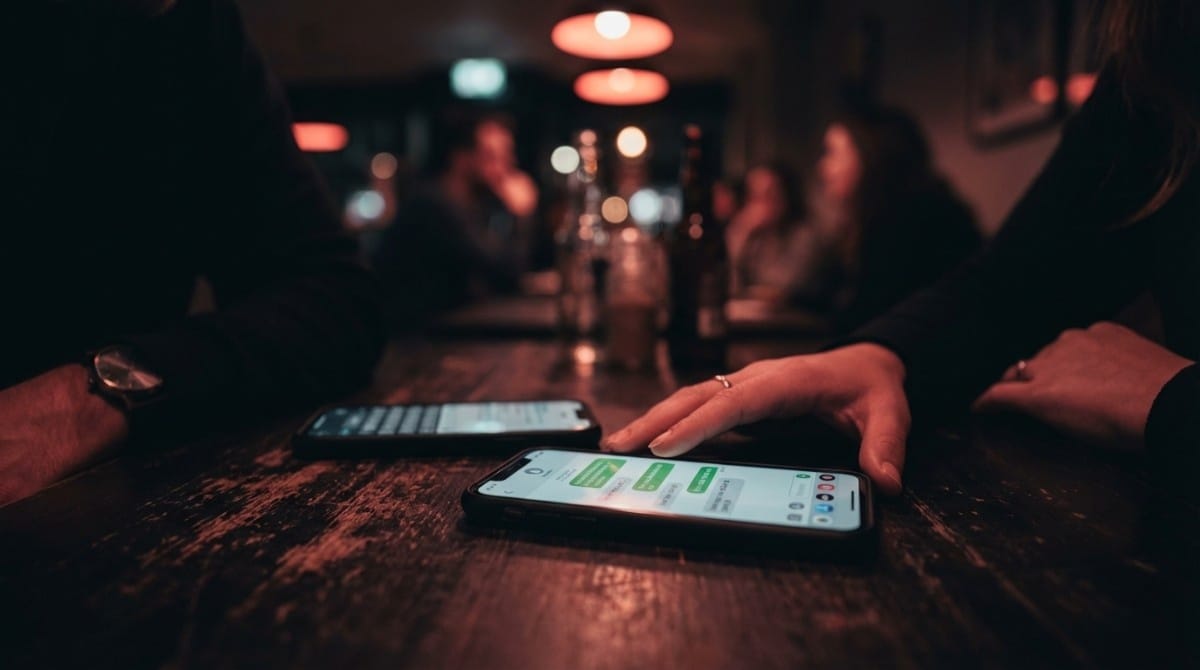
What Is the Talking Stage?
The talking stage sits between "matched" and "official." It's the grey zone where two people are interested but haven't committed to anything beyond the conversation.
It usually happens through texts and calls - sometimes before a first date, sometimes alongside early dates. The defining feature is intentional ambiguity: you're both gathering information without locking anything in.
This phase exists because modern dating gives people more options and less pressure to decide quickly. That's both a feature and a bug.
Why Does the Talking Stage Drag On?
The most common reason the talking stage stalls isn't incompatibility - it's fear.
Fear of rejection keeps people in the texting loop long past the point it's useful. Research in attachment theory consistently shows that individuals with anxious or avoidant attachment styles use texting as a substitute for real vulnerability - it feels close, but keeps risk at a safe distance.
A few other patterns that extend the talking stage unnecessarily:
- Keeping options open - one or both people are still actively dating others and aren't ready to reduce their pool
- Ambiguous intentions - one person wants something serious, the other hasn't decided yet
- Comfort addiction - the talking stage starts to feel safe; actually meeting raises the stakes
- Low initiative - neither person wants to be the one to "push" things forward
💡 Key Insight: The talking stage doesn't build connection by itself. It's the quality of what's communicated - honesty, curiosity, initiative - not the duration.
How Long Is Too Long? A Real Framework
Here's a grounded timeline based on how most modern dating situations unfold:
| Duration | What It Usually Means | Recommended Move |
|---|---|---|
| 1-2 weeks | Early momentum, still assessing | Keep going, suggest meeting soon |
| 2-6 weeks | Normal healthy talking stage | Strong signal to plan a real date |
| 6 weeks - 3 months | Slower pace, possibly cautious | Have a direct conversation about intentions |
| 3+ months, no dates | Situationship forming | Decide: escalate or exit |
| 6+ months, no change | Comfortable avoidance on both sides | Hard conversation needed |
Duration alone doesn't determine the health of the talking stage. Context matters: some people are long-distance, some are genuinely busy, some are more cautious by nature.
What matters more than time is trajectory - is the conversation deepening, or looping?

What Are the Signs You Should Move Past the Talking Stage?
These aren't rules - they're signals. Read the pattern, not individual messages.
🟢 Green Flags (Time to Make a Move)
- They consistently initiate conversations - not just responding when you do
- They suggest meeting up, or respond enthusiastically when you bring it up
- Conversations go deeper than surface-level topics (family, ambitions, real opinions)
- They're calling, not just texting
- They reference future plans that include you
🔴 Red Flags (Reevaluate Before Moving Forward)
- They've been "not ready" for weeks without any sign of change
- Conversations stay stuck at small talk despite your attempts to go deeper
- They cancel plans or avoid setting them without rescheduling
- They go quiet for days at a time, then resurface as if nothing happened
- The topic of what you both "are" makes them visibly uncomfortable every time
⚠️ When NOT to Use This: Don't treat this list as a scorecard. One late reply isn't a red flag. One deep conversation isn't a green flag. Look for sustained patterns over time.
Statistics & Research Insight
Studies in digital communication behavior suggest that the average person forms a strong initial impression within the first 7-10 days of consistent conversation. Research on attachment and texting (Morey et al., Journal of Social and Personal Relationships) found that anxious attachment styles are significantly more likely to over-text as a reassurance mechanism - and to misread delayed replies as rejection.
A 2022 survey by dating platform Hinge found that users who moved to a first date within 2 weeks of matching reported significantly higher satisfaction and conversion to second dates compared to those who texted for 4+ weeks before meeting.
The data points in one direction: shorter, more intentional talking stages tend to produce better real-world outcomes.

How to Actually Move Past the Talking Stage
Quick Framework - 4 Steps to Progression
Step 1 - Read the current signal clearly. Don't rely on gut feeling alone. Look at: who initiates more, how quickly they respond, what topics they engage with most. These are behavioral signals, not mind-reads.
Step 2 - Suggest a date with specific intent. Don't ask "do you want to hang out sometime?" Say: "I want to take you to [specific place] on [specific day] - are you free?" Vague invitations are easy to defer. Specific ones require a real answer.
Step 3 - Have the intention conversation - once. If you've been talking for 6+ weeks with no date, it's fair to ask once, clearly: "I'm enjoying this. I want to actually meet you - are you in the same place?" One clear question is direct. Repeated versions of the same question are pressure.
Step 4 - Act on what they show you. If they're excited and make it happen: move forward. If they deflect, go vague, or keep creating obstacles: that's your answer. Words are cheap in the talking stage. Movement is the signal.
💬 If you're finding it hard to read the conversation - whether they're into it, what their signals mean, or how to reply without killing the momentum - DatingX's Chat Decoder can analyze the thread and tell you exactly what's happening and what to do next.
What Happens If the Talking Stage Never Ends?
This isn't a rhetorical question - it has a real answer.
If the talking stage never transitions, one of three things is happening:
- One person doesn't want a relationship and is enjoying the attention without the commitment
- Both people are too anxious to take the next step and are stuck in comfortable avoidance
- There's genuine interest but significant logistical or emotional barriers that haven't been addressed
The psychological cost of an extended talking stage is real. Research on ambiguity in romantic relationships shows it consistently produces elevated cortisol responses and rumination. In plain terms: extended uncertainty makes people anxious and preoccupied - even when nothing bad has happened.
Prolonging the talking stage doesn't reduce risk. It just delays the information you need.
Final Takeaway
The talking stage exists to create clarity, not extend uncertainty. Two to six weeks is enough time to know whether someone is worth pursuing further. If you're past that and nothing has moved - no dates, no deeper conversations, no stated intentions - you're no longer in a talking stage. You're in a situationship.
Move forward or move on. Both are better than orbiting in the grey zone indefinitely.
🧠 Stop Guessing. Start Reading the Room.
Here's the challenge with the talking stage: the signals are rarely obvious. Someone can like your messages and never actually want to meet. Someone can reply slowly and be deeply interested. The pattern matters more than any single message - and most people aren't trained to read patterns under pressure.
That's exactly where DatingX becomes useful.
If you're in a talking stage and unsure what's happening - whether they're genuinely interested, whether the conversation is progressing, or how to respond to a message that felt slightly off - DatingX's Chat Decoder analyzes the full conversation and tells you:
- Their estimated interest level (scored)
- Green and red flags in the chat
- What your next move should be
No more asking friends. No more overthinking at 11pm. The decoder gives you a clear read in seconds.
And if what's stopping you from moving forward isn't strategy - it's nerves - DatingX's Virtual Date Simulator at practice.datingx.ai lets you practice the real conversation before it happens. A live voice call with an AI date character. Designed for the exact moment when the talking stage needs to become something real.
Three reasons DatingX works here:
- 🎯 Decodes real conversations with scored interest signals - not guesswork
- 💬 Suggests specific, natural next moves based on the actual thread
- 📱 Available on mobile - right when you need it, in the moment
Download DatingX and 10x your dating game.
FAQ
Q1: How long should the talking stage last before asking someone out?
A: Ideally, 2-4 weeks. After that window, you have enough signal to know if there's genuine interest. Waiting longer rarely adds useful information and often increases anxiety on both sides.
Q2: Is a 3-month talking stage too long?
A: For most situations, yes. Three months of texting with no dates or clear intention is typically a sign of avoidance - either emotional unavailability, fear of commitment, or low genuine interest. It's worth having a direct conversation about where things stand.
Q3: What are the signs the talking stage is going well?
A: Consistent mutual initiation, conversations that deepen over time, enthusiasm about meeting in person, and references to future plans. Reciprocity is the clearest signal.
Q4: Why do people stay in the talking stage too long?
A: Usually fear - of rejection, of vulnerability, or of reducing options. Anxious attachment styles tend to use texting as a safer substitute for real intimacy. Comfortable patterns also become hard to break even when they stop moving forward.
Q5: What should I do if they don't want to move past the talking stage?
A: Ask once, clearly, what they're looking for. If they deflect or keep stalling with no explanation, that's behavioral data. You can't force progression - but you can decide whether continuing to invest your time is worth it.