"Keep It Casual": What They're Actually Saying (And How to Decode It)
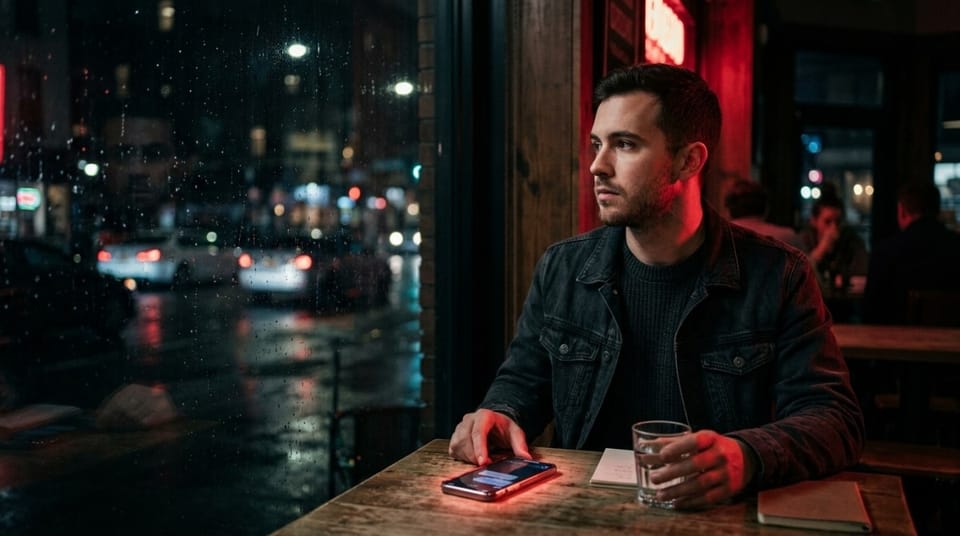
When someone says they want to "keep things casual," they're rarely just describing logistics - they're revealing something about their emotional state, their attachment style, and what they're willing to risk.
"Keeping it casual" in dating is a relational positioning statement that signals a deliberate limit on emotional investment, commitment, or vulnerability - regardless of physical or conversational intimacy.
TL;DR
- "Casual" rarely means one thing - it has at least 5 distinct psychological subtypes
- The phrase is often used defensively, not honestly
- Context, timing, and behavior after saying it reveal more than the words themselves
- Pushing back on the label too early almost always backfires
- You can navigate "casual" without losing your own positioning - if you know what you're reading

What Does "Something Casual" Actually Mean?
The word "casual" in dating has become a load-bearing phrase - everyone uses it, almost no one defines it the same way.
At its core, it signals: I want connection without the weight of obligation. But what that obligation refers to - emotional, physical, social, or logistical - differs by person.
The mistake most people make is treating "casual" as a fixed category. It's not. It's a relational state with multiple underlying drivers, and each driver requires a completely different response strategy.
The 5 Psychological Subtypes Behind "Casual"
Not all "casual" is the same. Here's what's actually happening beneath the label:
Reading the subtype accurately is the difference between a conversation that leads somewhere and one that slowly erodes your confidence.

Why Does "Casual" Sometimes Mean the Opposite?
One of the more counter-intuitive dynamics in modern dating: people who want something serious often open with "I'm not looking for anything serious."
The psychological mechanism here is preemptive rejection protection - stating low investment before genuine investment develops. If they say "I'm casual" and things go nowhere, they haven't failed. If things escalate naturally, the framing can be quietly revised.
This is more common than most people realize. Research on attachment behavior consistently finds that avoidantly-attached individuals understate relationship desire early in connection - not to deceive, but to self-protect.
Key Insight: The phrase "I'm not looking for anything serious right now" has the highest variability in actual meaning of any common dating phrase. Treat it as a hypothesis to test over time - not a fixed fact.
If someone says they're casual but:
- Initiates contact consistently
- References future plans
- Demonstrates jealousy-adjacent behavior
- Shares information they didn't need to share
...then the label is likely protective positioning, not a genuine boundary.
How to Respond When Someone Says "Keep It Casual"
Most people respond to this phrase in one of two broken ways: they either immediately agree (losing positioning) or push back and create pressure (triggering withdrawal).
The strategically intelligent move is neither.
The 4-Step Casual Acknowledgment Framework:
- Receive it without reaction. Don't agree enthusiastically or challenge it. A neutral "noted" energy signals security, not indifference.
- Observe behavior for 2-3 interactions. Words set frames; behavior fills them in. What does "casual" look like in practice for this person?
- Name your own positioning - once, simply. Not a negotiation. Just clarity: "I'm not in a rush either, but I don't do ambiguity for long." Then drop it.
- Re-evaluate based on trajectory, not declaration. Are things deepening naturally? Are they consistent? That matters more than the label they set three weeks ago.
This approach keeps your positioning intact without drama, pressure, or people-pleasing.

What Happens If You Ignore the "Casual" Signal?
Ignoring the signal entirely - proceeding as if full commitment is on the table - typically produces one of two outcomes:
Outcome A - Gradual Drift: The other person begins to feel pressure building without a conversation happening. They start pulling back in small ways. You read this as mixed signals. They're actually enforcing the framing they communicated upfront.
Outcome B - Abrupt Recalibration: You make a gesture that implies more than "casual" - a defined plan, an emotional disclosure, a reference to exclusivity - and they respond with sudden distance or an explicit "I told you I wasn't looking for this."
Both outcomes are painful and avoidable with cleaner signal-reading.
When NOT to Use This Framework
- If they've been explicitly direct and consistent over time: "I don't want a relationship." Treat this as true, not a puzzle to decode.
- If you realize you want something they've genuinely said they don't: the strategic play is exit, not optimization.
- If you're using "decoding casual" as an excuse to override a boundary: step back. The goal is signal clarity - not finding a workaround.
Statistics & Research Insight
Studies on relationship ambiguity suggest that couples who remain in undefined relationship status for more than 6 months report significantly lower emotional satisfaction scores than those who reached clarity in either direction - regardless of which direction.
The ambiguity itself is the cost - not the outcome. This is why "reading the signals" is a time-sensitive skill, not a permanent strategy.
A 2022 analysis of dating app user behavior found that profiles listing "something casual" or similar phrasings received 40% more matches on average - but converted to sustained conversations at a lower rate than profiles with clearer relationship intent signals, suggesting the phrase functions more as friction-reducer than honest filter.
Final Takeaway
"Casual" is one of the most overloaded words in modern dating. The people who navigate it best aren't the ones who accept it without question or fight it with pressure - they're the ones who can read the subtype, hold their own positioning, and let behavior speak louder than framing.
The phrase tells you where someone is emotionally guarded. What you do with that information determines everything else.
🔥 DatingX Feature Plugin
Understanding what someone means is only half the challenge. Knowing what to say next - after "casual" enters the conversation - is where most people freeze.
DatingX's Chat Decoder was built for exactly this. Paste in a conversation - the exchange where "casual" came up, the mixed signal, the half-answer - and the AI breaks down the subtext, identifies what's actually being communicated, and suggests your next move based on what you're trying to achieve.
It doesn't give you generic copy. It reads the dynamic you're actually in.
Three things Chat Decoder does that static advice can't:
- Reads the emotional register of the conversation, not just the words
- Maps behavior patterns across the thread, not just the last message
- Suggests responses calibrated to your specific situation and goal
And if you're at the earlier stage - not sure whether to open, how to respond to the first reply, or how to keep a conversation from going cold - the Convo Replier keeps you sharp in real time.
👉 Decode your conversation now at datingx.ai/decoder
Download DatingX and 10x your dating game.
Frequently Asked Questions
Q1: What does "something casual" mean on a dating app profile? It typically signals the person wants physical or social connection without the expectation of exclusivity or emotional commitment. However, it's a loose phrase - follow-up behavior is a more reliable indicator of what they actually want than the label itself.
Q2: Can casual dating turn into a serious relationship? Yes, and it does frequently - particularly when one or both people are using "casual" as emotional protection rather than a genuine preference. The key is whether both people's actual behavior (not their stated framing) starts trending toward investment, consistency, and depth over time.
Q3: How do you respond to someone saying they want to keep it casual? Avoid immediately agreeing or challenging it. Acknowledge it neutrally, observe how they behave over the next few interactions, and state your own positioning simply and once. "I'm not rushing anything, but I don't stay in ambiguity long" is a composed, non-pressuring response.
Q4: What's the difference between casual dating and friends with benefits? Casual dating usually involves active exploration - dates, getting to know each other - without commitment. FWB typically implies an existing friendship base and primarily physical connection without romantic pursuit. The emotional expectations are structured differently.
Q5: How do you know if someone saying "casual" actually wants more? Watch for: consistent and voluntary contact initiation, references to future plans involving you, sharing personal information they didn't need to share, and any behavior that looks like mild jealousy or possessiveness. These behaviors contradict a genuinely low-investment "casual" frame.